
Class 4 Worksheet on Affect vs. Effect Confusion

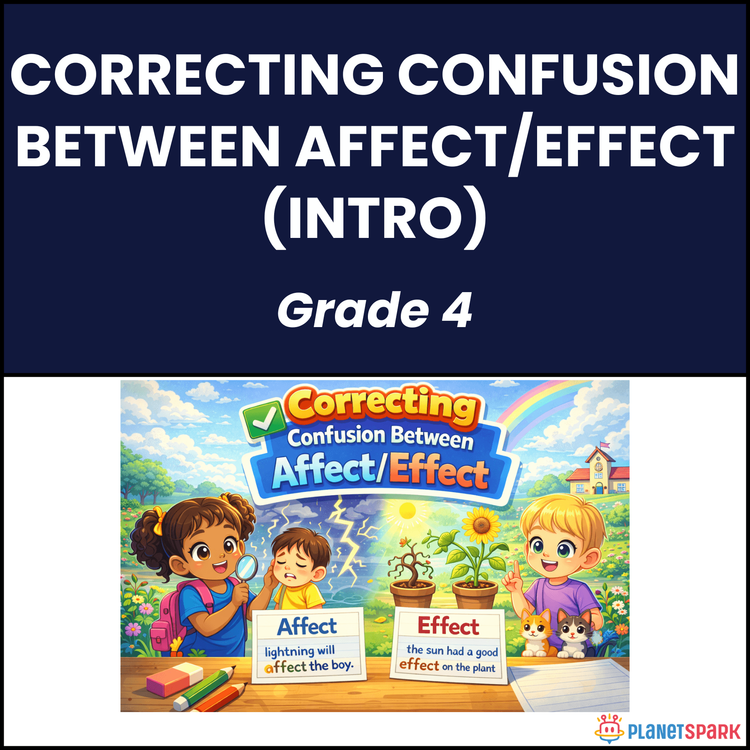
Class 4 Worksheet on Affect vs. Effect Confusion
Action or Result: Mastering Affect vs. Effect for Grade 4
This introductory Grade 4 worksheet is expertly designed to help students untangle one of the most common word pair mix-ups in the English language: "affect" and "effect." By breaking down the core rule—"affect" is typically an action word (verb) and "effect" is typically a result word (noun)—this resource provides a clear and structured path to mastery. Through practical, real-world examples, young learners will gain the confidence to use these words correctly in their writing and speech.
Why Mastering Affect vs. Effect Matters in Grammar?
For Grade 4 students, understanding the difference between "affect" and "effect" is a significant step toward grammatical precision. This topic is important because:
1. It clarifies a high-frequency confusion that even adults encounter, giving students an early advantage.
2. It reinforces the fundamental concepts of nouns and verbs in a practical, high-impact way.
3. It enhances the clarity and professionalism of their written and spoken communication.
What's Inside This Worksheet?
This worksheet includes five targeted activities to build a deep understanding:
Exercise 1 – True or False
Students read sentences and decide if the usage of "affect" or "effect" is correct. This quick assessment identifies common misconceptions right from the start.
Exercise 2 – Multiple Choice Questions
Students choose the correct word from two options to complete each sentence. This classic format reinforces the verb/noun distinction in a straightforward manner.
Exercise 3 – Fill in the Blanks
Students select the appropriate word from a given pair to complete a sentence. This activity encourages active application of the grammar rule in various contexts.
Exercise 4 – Underline and Rewrite
Each sentence in this exercise contains an incorrect usage of "affect" or "effect." Students must identify the error and rewrite the sentence correctly, building essential editing and proofreading skills.
Exercise 5 – Paragraph Writing
This comprehensive exercise presents a paragraph about daily habits with blanks. Students must fill in each blank with the correct word ("affect" or "effect"), demonstrating their mastery in a connected, real-world writing task.
Answer Key
Exercise 1 – True or False
1. True
2. False (Raj's decision affected his mood.)
3. True
4. False (Changing the bus route affected students' timing.)
5. False (The power outage affected many people.)
6. True
7. True
8. False (The effects of the fire were widespread.)
9. False (The noise affected the exam hall.)
10. True
Exercise 2 – Multiple Choice Questions
1. b) effect
2. a) affect
3. a) affect
4. b) effect
5. a) affect
6. b) effect
7. a) affect
8. a) affect
9. b) effect
10. b) effect
Exercise 3 – Fill in the Blanks (Word from Page 6)
1. effects
2. effect
3. affect
4. affect
5. affect
6. effects
7. affected
8. effect
9. effect
10. affect
Exercise 4 – Underline and Rewrite
1. The positive effect of exercise is undeniable.
2. The weather will affect our plans for the picnic.
3. How does this movie affect you?
4. The effect of her hard work was a promotion.
5. The team worked together to effect a successful outcome.
6. The lack of sleep can affect Ravi's performance.
7. The effect of the medicine was immediate.
8. Neha's words affected me deeply.
9. The heavy rain affected the road conditions.
10. The mediator hoped to effect a peaceful resolution.
Exercise 5 – Paragraph Writing
The way we handle our daily habits can greatly affect our overall well-being. For example, getting enough sleep can have a positive effect on our mood and energy levels the next day. On the other hand, staying up late can affect our ability to focus and make decisions. A poor diet can affect our immune system, making us more vulnerable to illnesses. Regular exercise has a long-term effect on our strength and endurance, while a lack of physical activity can affect our mental health. In the end, the small choices we make each day can either have a beneficial or negative effect on our lives.
Help your child master tricky word pairs like affect/effect and become a precise communicator with a Free 1:1 Communication Skills Trial Class at PlanetSpark.
Frequently Asked Questions
Affect is a verb (to influence), and "effect" is a noun (the result). Understanding their different functions helps students use them correctly in sentences.
These words are often confused because they sound similar but are used in different contexts. Practice and sentence examples help students master their usage.
By providing exercises that ask students to choose between "affect" and "effect" in different contexts, worksheets will help solidify their understanding.